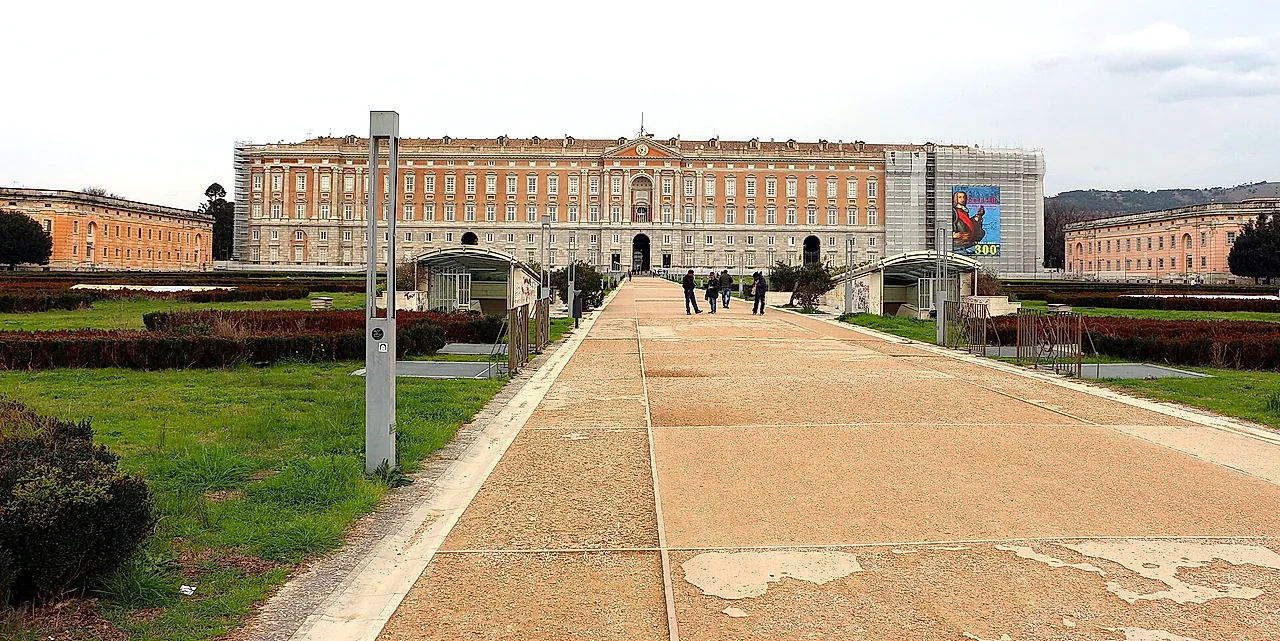
The Royal Palace of Caserta was begun by Charles of Bourbon, King of Naples, with the architect Luigi Vanvitelli, and its first stone was laid on 20 January 1752. It was conceived as the centre of a larger royal project, and since 1997 it has been a UNESCO World Heritage Site. The dates and names below come from the museum’s official pages.
Book your visit
Royal Palace of Caserta: Skip The Line Ticket + Guided Tour
4.9· 118 reviews
from €38
Buy tickets →Who was Charles of Bourbon, and why Caserta?
Charles of Bourbon (1716-1788) became king of Naples in 1734. In 1750 he bought the fief of Caserta (the Caserta estate), where the new royal residence would rise.
Who was Luigi Vanvitelli?
Luigi Vanvitelli (1700-1773) was the architect entrusted with the design. His plan was not just a palace. The design also included the Carolino Aqueduct, San Leucio and Carditello, conceived together. That is why the UNESCO listing covers more than the building itself.
How did the work progress?
| Year | Event |
|---|---|
| 1734 | Charles of Bourbon becomes king of Naples |
| 1750 | He buys the fief of Caserta |
| 20 January 1752 | First stone of the palace laid |
| 1753 | Layout of the park drawn and first trees planted |
| 1756 | “Declaration of the designs”, planning 19 fountains |
| 1773 | Luigi Vanvitelli dies |
| 1777 | A new park project is presented to Ferdinand IV |
After Luigi’s death his son Carlo completed the project, with changes to the original plans. We do not give a completion date for the whole complex, because we could not verify it from official sources.
How was the park created?
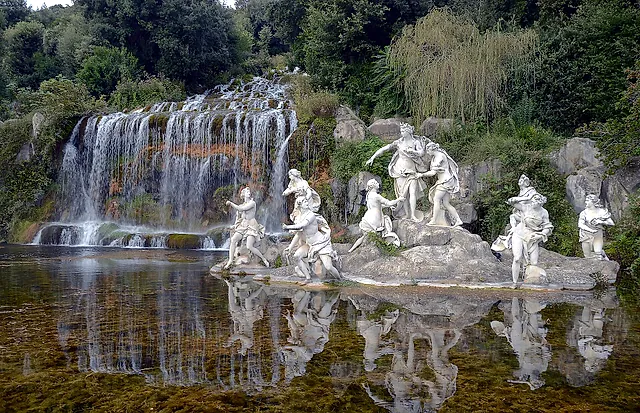
The park was laid out from 1753, when the layout was set and the first trees planted. In 1756 the “Declaration of the designs” foresaw 19 fountains. Today the Royal Park covers 100 hectares along about 3 km of water axis; read about walking it in our guide to the Royal Park and English Garden. For the romantic landscape garden, the museum’s park page gives the details.
Why is Caserta a UNESCO World Heritage Site?
In 1997 the site was inscribed on the World Heritage List as the “18th-Century Royal Palace at Caserta with the Park, the Aqueduct of Vanvitelli, and the San Leucio Complex”. The name lists four elements: the palace, the park, the Vanvitelli aqueduct and the San Leucio complex. The official summary is on the museum’s English page.
What can I see today?
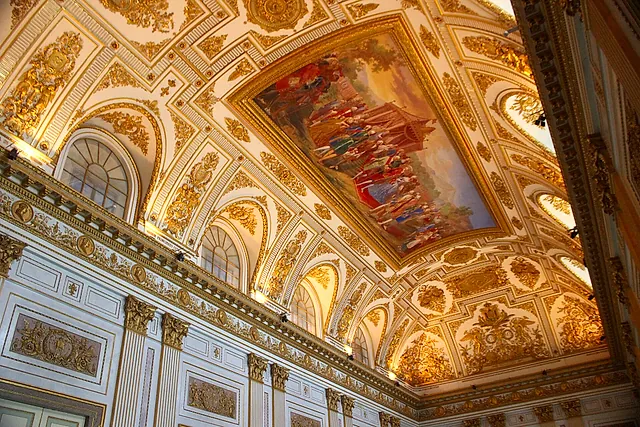
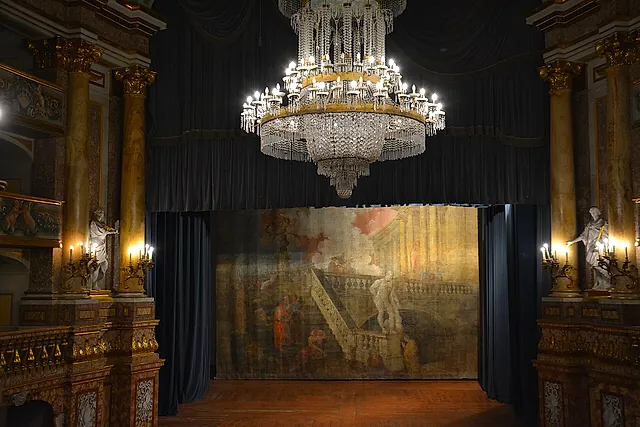
Today the palace is run by Italy’s Ministry of Culture as a museum. Inside are the Royal Apartments, the Grand Staircase, the Palatine Chapel, the Court Theatre and the Great Gallery. Our guide to what to see shows how to organise the route.
Plan your visit
Check the opening hours and ticket prices before you go, and see how to get there. The main Reggia page gathers everything in one place.